Currently running Lead Ads on Meta and sending these to our API via Webhook.
Based on validation criteria, these leads can either be accepted or rejected by our API.
I want to send only validated leads back to Meta so we can optimise towards these and hopefully improve our acceptance rate.
I previously tried setting this up within the current zap flow using the output from the Webhook step, but the success criteria in the filter status for some reason couldn’t detect the response from the API (even though the individual zap runs show this in ‘data out’)
Would appreciate it if someone could tell me how best to do this.
Best answer by SamB
Hey all, circling back here to clarify that the "Send Offline Event" action that was suggested here was part of the old Facebook Offline Conversions app, which is actually no longer available for new Zap workflows.
To send validated leads back to Meta, you'd need to use the Facebook Conversions app instead, with either the Send Purchase Event or Send Other Event action. When setting it up, set the Action Source to Physical Store and connect it to your existing pixel dataset in Meta Events Manager. See Changes impacting Facebook Offline Conversions users to learn more.
That said, Stacy's suggestion to add a Code step between the Webhook and Filter steps should allow the API response to be parsed so the Filter step can read the success criteria.
This post has been closed for comments. Please create a new post if you need help or have a question about this topic.
The filter step can't read the webhook response directly because Zapier treats the raw body as a single unparsed output. It sees the data, but can't interrogate it cleanly enough for a filter condition to work reliably.
The fix is to add a step between your webhook and your filter. After the webhook step, use Zapier's built-in Code step (Python or JavaScript, either works) or a JSON parser to explicitly pull out your acceptance status field. Once that field is its own named output, your filter will see it without any issues.
Once the filter is working, you can send accepted leads to Meta's Conversions API using the "Send Offline Event" action. That's what actually feeds the validated signal back to Meta for optimization.
Two things worth double checking before you build it out: make sure your Meta pixel is tied to the same ad account as your Lead Ads campaign, and confirm your API is returning a consistent field name for accepted vs rejected so your filter condition stays predictable.
We would need to see screenshots showing how your Zap steps are outlined/configured along with the returned response from the webhook step to see the structure.
Hey all, circling back here to clarify that the "Send Offline Event" action that was suggested here was part of the old Facebook Offline Conversions app, which is actually no longer available for new Zap workflows.
To send validated leads back to Meta, you'd need to use the Facebook Conversions app instead, with either the Send Purchase Event or Send Other Event action. When setting it up, set the Action Source to Physical Store and connect it to your existing pixel dataset in Meta Events Manager. See Changes impacting Facebook Offline Conversions users to learn more.
That said, Stacy's suggestion to add a Code step between the Webhook and Filter steps should allow the API response to be parsed so the Filter step can read the success criteria.
Early access
Next Gen Zaps
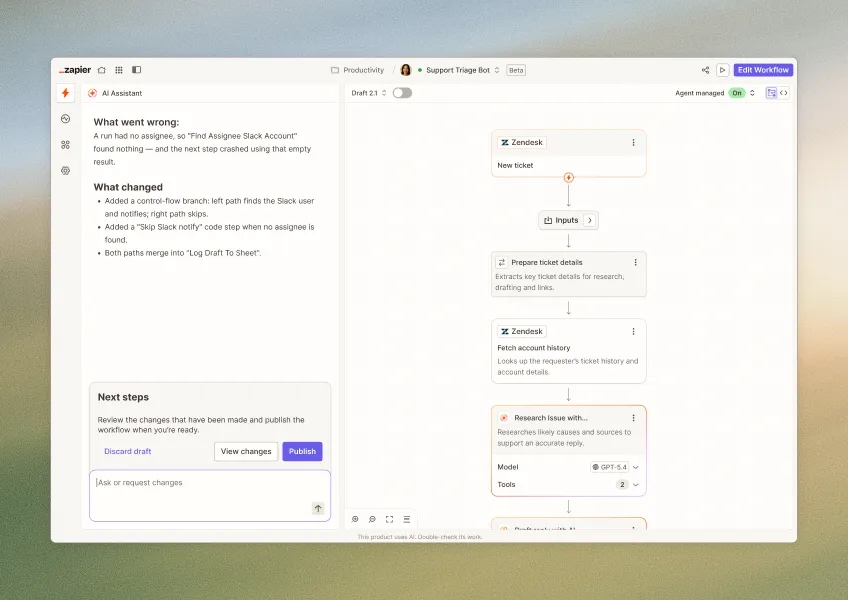
Build and deploy automations from AI tools you already use. With Agentic Management, if anything breaks, the agent diagnoses the issue and proposes a fix.